
Exploring the differences in cost, preparation, pattern matching and the finished appearance of two very different fabric wall-covering techniques.
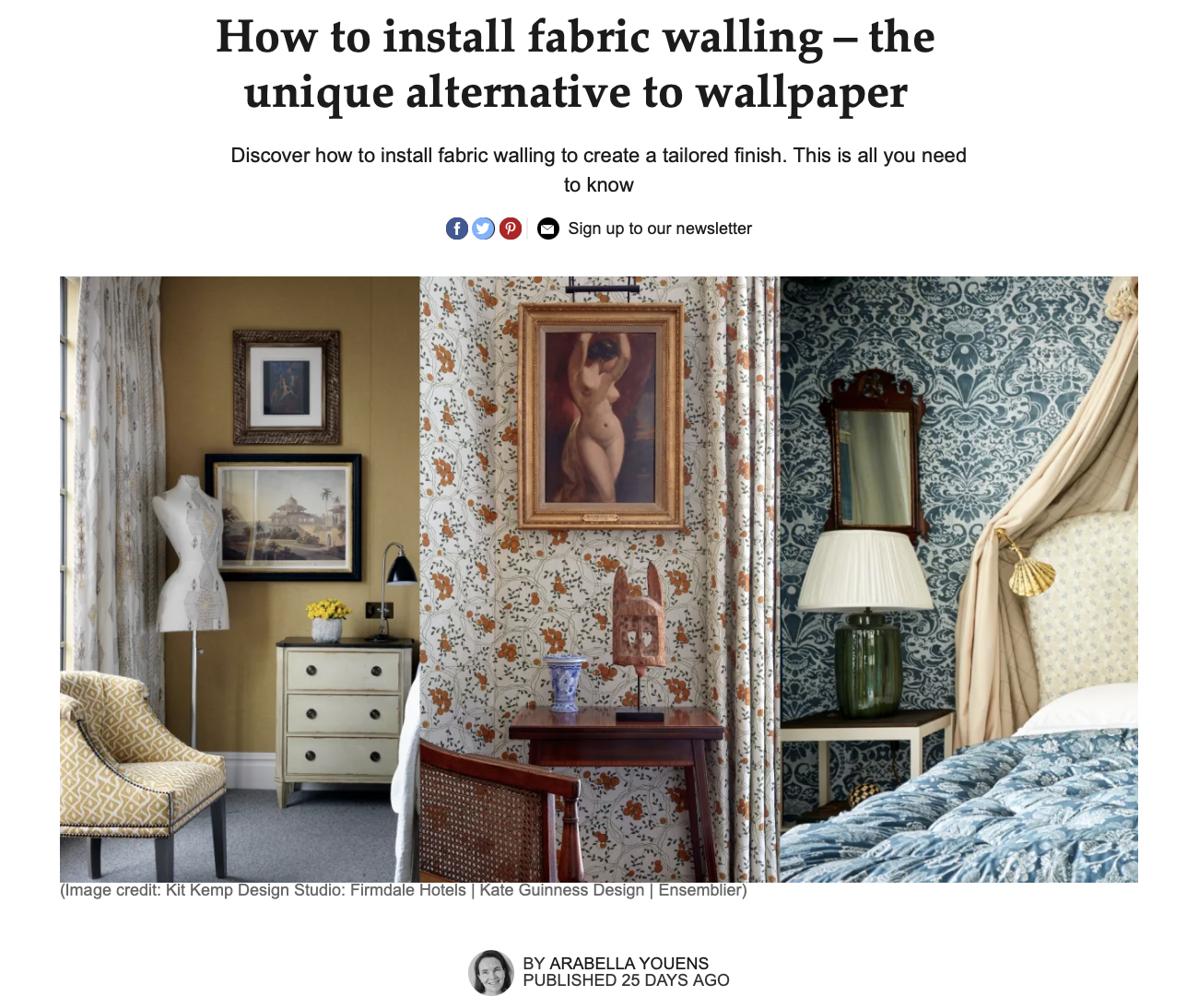
Several years ago, I was contacted by interiors journalist Arabella Youens, who was writing an article for Homes & Gardens about fabric walling and how it compared with paper-backed fabric.
There was so much I wanted to share about the subject that I decided to write an article of my own.
Traditional fabric walling is often regarded as a luxurious, specialist finish, and consequently, one that must be considerably more expensive than alternative wall coverings. But is having a decorative fabric professionally paper-backed necessarily a more economical option? And perhaps more importantly, does it produce the same beautifully tailored finish?
Having worked with traditional stretched fabric walling since 2010, I'm not convinced that paper-backing is always the simpler or more cost-effective solution.
Both techniques have their merits, but the preparation involved, suitability of the chosen textile and quality of the final installation can be surprisingly different.
What's the Difference Between Paper-Backed Fabric and Stretched Fabric Walling?
Although both methods allow decorative textiles to be used as wall coverings, the installation processes are fundamentally different.
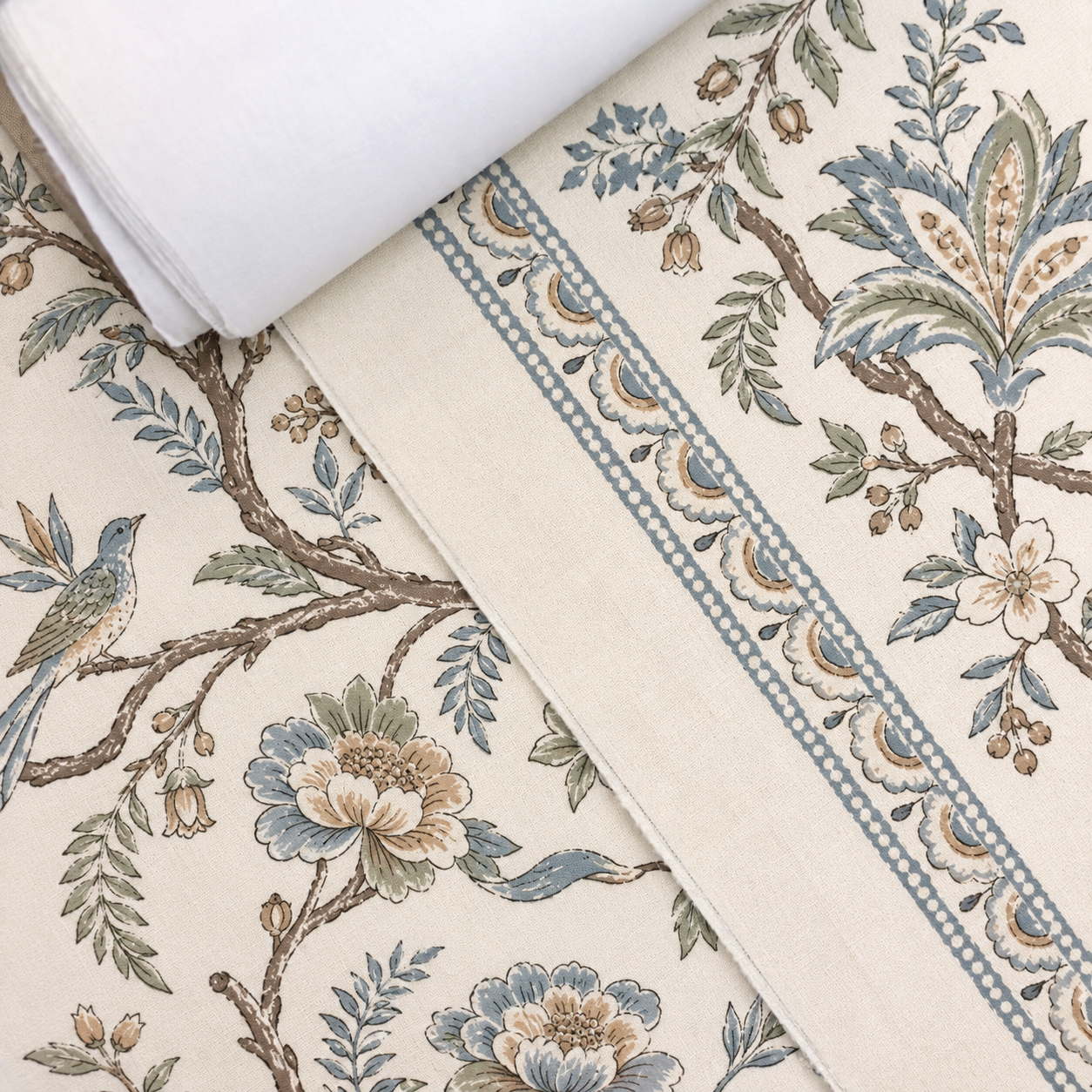
Paper-Backed Fabric
Paper-backed fabric is a decorative textile that has been bonded to a paper backing, allowing it to be hung onto a prepared wall using a suitable adhesive, much like a specialist wallpaper.
The backing provides additional support and can make certain textiles easier to handle and install. However, the process changes the characteristics of the fabric, and the finished covering sits against the underlying wall surface. The quality of the result depends on the textile, backing process, wall preparation and skill of the installer.
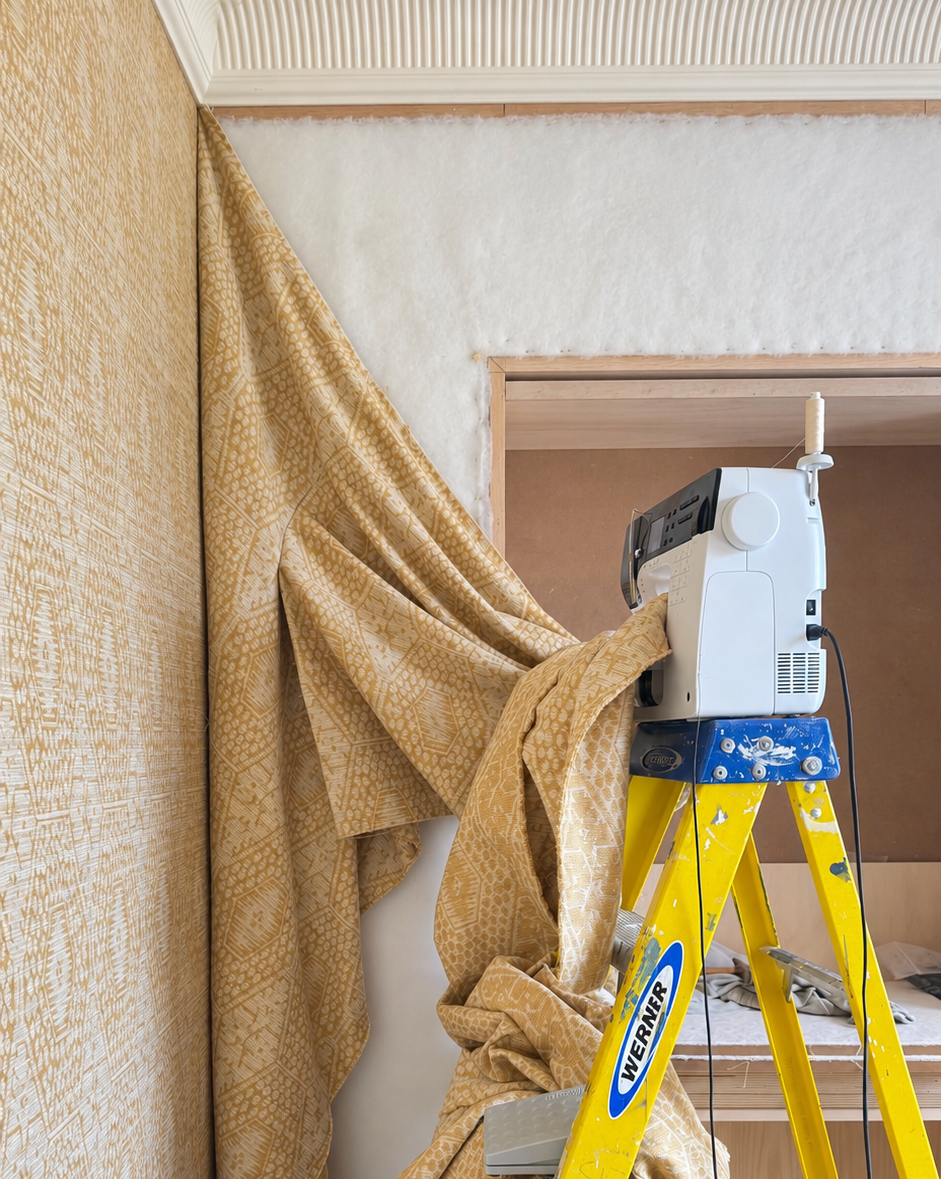
Stretched Fabric Walling
Our traditional fabric wall upholstery method takes a different approach. Rather than bonding the textile directly to the wall, we first install a discreet framework of timber battens, followed by a layer of soft wadding. Individual fabric drops are carefully pattern-matched and machine-stitched together before being stretched and tensioned across the framework.
The fabric is discreetly secured around the perimeter and finished with decorative braid or bespoke double piping. This creates a softly padded, beautifully tailored wall covering that retains the tactile qualities of the original textile.
When Paper-Backing Doesn't Go to Plan
Over the years, I've been contacted by interior designers who have encountered difficulties with paper-backed fabric.
Two particular installations prompted me to examine the differences between these methods more closely.
A Checked Fabric That Wouldn't Stay Straight
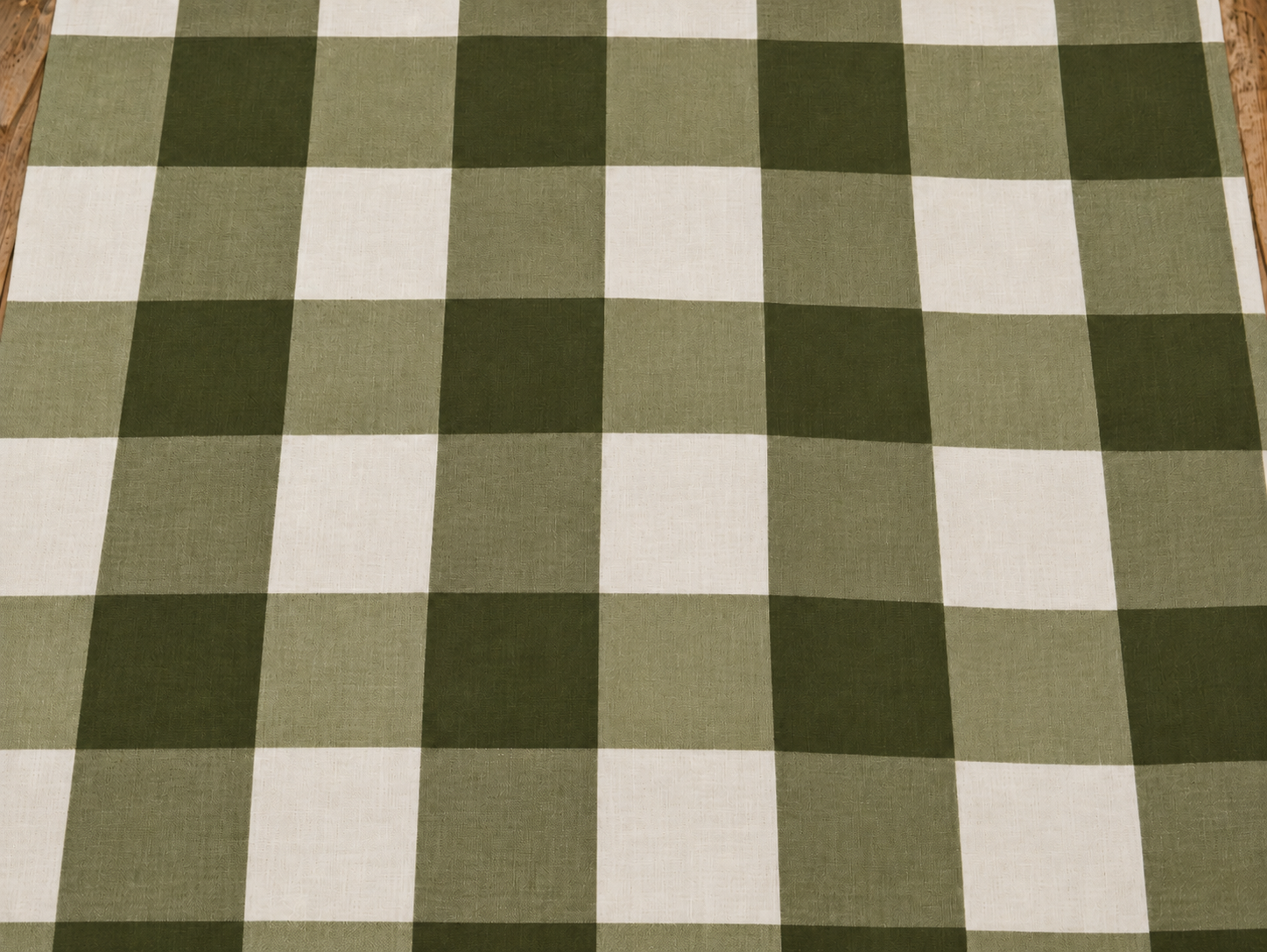
Illustration of how a checked textile may become distorted during the paper-backing process, leaving the horizontal lines uneven and misaligned.
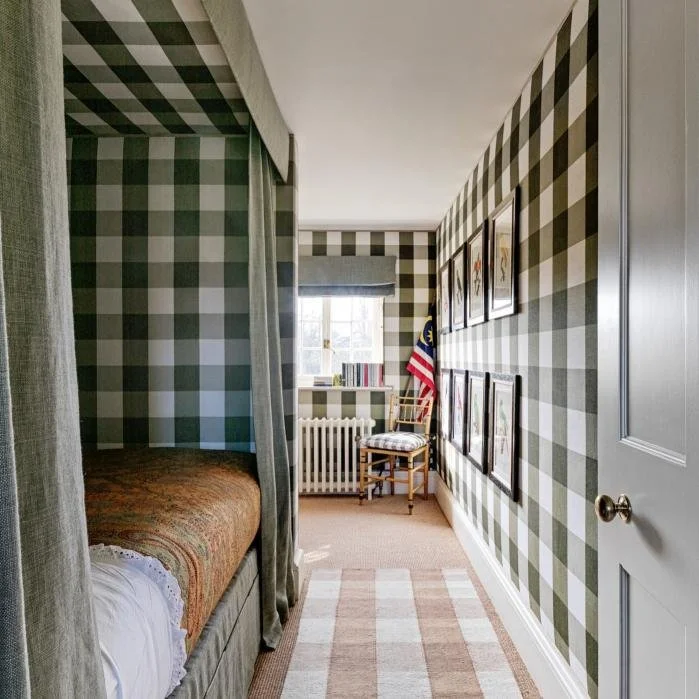
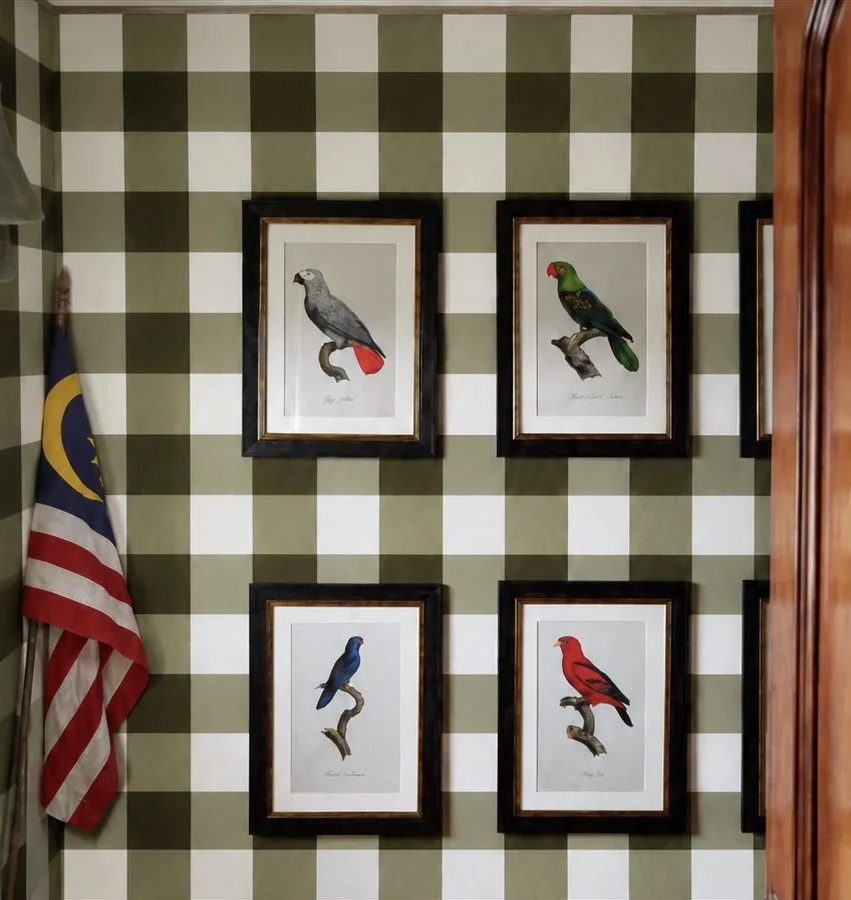
On one occasion, an interior designer had arranged for a checked fabric to be paper-backed for a small bedroom. Unfortunately, during the backing process, the fabric had distorted, leaving the checks no longer perfectly straight and uniform.
Spot the distortion on the right hand side.
With a geometric design, even relatively small irregularities can become obvious once the fabric is positioned across a wall. We were subsequently asked to install the original decorative fabric using our traditional stretched fabric walling method.


After preparing the walls and ceiling with battens and wadding, we carefully stitched the fabric together, paying particular attention to the alignment of the checks.
The prepared covering was then stretched and tensioned into position, creating a beautifully balanced result.
This project demonstrated the advantage of being able to work directly with a textile, carefully adjusting the placement and alignment before completing the installation.
When Hessian Seams Became Too Noticeable
On another occasion, a designer contacted me after a plain hessian fabric had already been paper-backed and applied to the walls. Unfortunately, the joins between the individual lengths appeared thick and pronounced, creating visible raised lines across the surface.
The proposed solution was to apply decorative braid or trim over each vertical seam. Although this might conceal the join itself, it would also introduce a prominent decorative line wherever two lengths met. For this particular interior, the intention had been to achieve a softly textured, continuous appearance rather than a panelled effect.
It's an important distinction: decorative trims can be beautiful when they're an intentional part of the design, but they shouldn't necessarily be relied upon to disguise an unsatisfactory seam.
Why Choose Paper-Backed Fabric?
There are several understandable reasons why an interior designer might consider paper-backed fabric. The first is familiarity. The finished product is installed using a process that resembles wallpaper hanging, making it appealing where a project already includes extensive wallpaper installation.
Another consideration is the ability to use the same decorative textile throughout a room, coordinating walls with curtains, upholstery, cushions and other soft furnishings. Fabric widths can also differ from conventional wallpaper widths, potentially allowing fewer vertical joins.
For an appropriate textile, a properly prepared surface and a specialist installer, paper-backed fabric can produce an attractive result. However, the backing process is not necessarily suitable for every fabric, particularly those with delicate structures, pronounced textures or patterns requiring precise alignment.
Why I Prefer Traditional Stretched Fabric Walling
For many of the interiors we work on, I believe traditional stretched fabric walling offers greater flexibility and a more beautifully upholstered finish.
1. The Fabric Retains Its Natural Character
One of the greatest attractions of fabric walling is its texture. A luxurious velvet, softly woven linen or delicate silk has an inherent character that deserves to be celebrated.
With traditional stretched wall upholstery, the decorative textile remains separate from the underlying wall and sits softly over the wadding. This allows the fabric to retain much of its original tactile quality rather than becoming bonded to a paper backing.
The result feels less like wallpaper and more like an integral part of the room's soft furnishings.
2. Greater Control Over Pattern Matching
Pattern matching is an essential part of our installation process. When working with checks, stripes or intricate decorative motifs, the positioning of the fabric drops must be considered carefully before installation begins.
We machine-stitch the fabric drops together, aligning the pattern to create discreet seams before stretching the prepared covering across the wall. If a join isn't quite right, we can unpick and restitch it before the installation proceeds.
By comparison, some textiles can move or distort during the paper-backing process, so it's important to establish whether the chosen fabric and pattern are suitable before treatment.
Our separate Journal article, The Art of Seam Placement & Pattern Matching, explores this process in greater detail.
3. A Softer, Padded Finish
Traditional fabric walling includes a layer of wadding between the wall and the decorative textile. This creates the softly upholstered appearance that distinguishes the technique from conventional wall coverings.
The padded construction can introduce visual depth, warmth and softness, particularly in bedrooms, drawing rooms and intimate interiors. Depending on the materials and overall wall construction, fabric-covered surfaces can also help reduce sound reflections and reverberation. However, any specific acoustic or thermal performance requirements should be assessed and supported by appropriate testing rather than assumed from the presence of fabric alone.
4. More Flexibility with Existing Wall Surfaces
Another significant advantage is the way our installation framework can accommodate certain irregularities in the underlying walls. Paper-backed fabrics generally require a suitably prepared, smooth and stable surface, with any necessary lining, sealing and priming undertaken before installation.
Traditional stretched fabric walling works differently. Because we install battens and wadding before applying the decorative covering, we can accommodate some minor surface irregularities without requiring an entirely smooth plaster finish.
I have even worked on a project where we adjusted the framework to conceal a small pipe protruding from the wall.
Of course, any underlying damp, instability or structural defects must still be addressed before installation. This flexibility can be particularly useful in older properties, where walls aren't always perfectly straight or uniform.
What About Delicate and Loosely Woven Fabrics?
Not every decorative textile behaves in the same way, and both installation methods require careful consideration of the chosen material.
Loosely woven fabrics, for example, can sometimes reveal the surface beneath them.
With traditional fabric walling, we can consider introducing a secondary lining in a colour that complements the decorative textile, helping to prevent the underlying wadding from showing through the weave.
We can also produce a sample panel upon request to assess the fabric's appearance and behaviour when stretched over the proposed padding.
This is particularly useful when working with unusual, delicate or expensive textiles.
A Note on Velvet
Velvet requires particular care because of its pile and sensitivity to pressure.
Depending on the material and the backing process, excessive pressure or handling can alter the appearance of the pile, potentially leaving flattened or uneven areas.
This is not inevitable with every backed velvet, but it's certainly something I would want to investigate before committing an expensive textile to treatment.
Where appropriate, a small sample should be assessed before proceeding.

Here is a project we did for a guest house in Westgate-On-Sea. We stitched, hung and stretched drops of beautiful olive green fabric together over the walls of a dining room. Velvet is so tactile for this type of room in both size and space, dulling down the sound or the acoustics especially when events and dinners are being held!


“‘Fabric walling has its roots in tradition, but this craft is very much alive today for both historic and contemporary interiors: fabrics beautify walls.’”
Is Paper-Backed Fabric Cheaper Than Traditional Fabric Walling?
This is perhaps the most important question, and one where I believe the comparison is often oversimplified.
Paper-backing may initially appear to be the less expensive option, particularly when comparing the cost of the backing treatment with the labour involved in traditional wall upholstery.
However, that doesn't necessarily reflect the total cost of the finished installation. For a meaningful comparison, the entire process needs to be considered.
Paper-Backed Fabric Costs
Depending on the project, costs may include:
The decorative fabric itself
Professional paper-backing treatment
Transport and handling of the fabric
Preparation, lining or sealing of the walls
Specialist installation labour
Pattern matching, trimming and any decorative finishes
Traditional Fabric Walling Costs
For stretched fabric walling, costs generally include:
The decorative fabric
Timber battens and installation preparation
Wadding and any necessary interlining
Cutting, pattern matching and machine-stitching
Stretching and securing the fabric on site
Decorative braid or bespoke double piping
The difference in overall cost depends on the existing condition of the walls, the fabric specification, architectural complexity and labour required. A newly plastered, perfectly prepared room may make paper-backed fabric relatively straightforward to install.
In a historic property with irregular walls and intricate architectural features, traditional fabric walling may offer practical advantages that change the overall cost comparison.
My advice is always to compare the complete supply-and-installation cost rather than the price of paper-backing treatment alone.
Preparing the Room for Installation
Whichever technique is chosen, careful preparation is essential. For our traditional fabric walling installations, we generally ask that major building works are completed and that the room is clean, dry and ready for its decorative finishes.
Skirting boards, cornices, architraves and other relevant joinery should ideally be in place, and painting should be completed and fully dry. Electrical positions and architectural details should also be agreed before installation begins.
Wall lights, switches, sockets, curtain fittings and any other fixtures that interact with the upholstered surface need to be considered in advance. Where electrical disconnection or alterations are required, we coordinate with the project's qualified electrician.
Getting these details right before we arrive allows our team to concentrate on the fabric preparation and installation itself.
The Importance of Seam Placement
One of the most noticeable differences between the two methods can be the way the joins are treated.
For paper-backed fabric, individual lengths are generally installed separately, with the seams meeting on the prepared wall surface.
With traditional stretched fabric walling, we prepare the drops in advance, machine-stitching them together to create a continuous covering for each wall wherever the fabric and room permit. Careful positioning allows us to balance the pattern around fireplaces, headboards, windows and other architectural features.
Our aim is always to make the seams as discreet as possible. We then use decorative braids or bespoke double piping around the perimeter of the upholstered walls to conceal the installation fixings and create a refined finish.
For anyone interested in understanding the planning behind this process, I've written a separate article exploring fabric seam placement and pattern matching.
Which Method Would I Recommend?
There isn't one installation method that suits every fabric, building or interior.
Paper-backed fabric can be an attractive solution where the textile is suitable, the walls are properly prepared and the desired finish is closer to a traditional wall covering. However, for clients looking for the softness, depth and craftsmanship of a genuinely upholstered interior, I would recommend considering traditional stretched fabric walling.
It allows us to work closely with the character of the textile, accommodate many architectural details and carefully control the placement of stitched seams.
Above all, it creates the distinctive, beautifully tailored appearance that first made me fall in love with fabric wall upholstery.
Why turn a beautiful piece of fabric into something resembling wallpaper when you can celebrate it as fabric?